
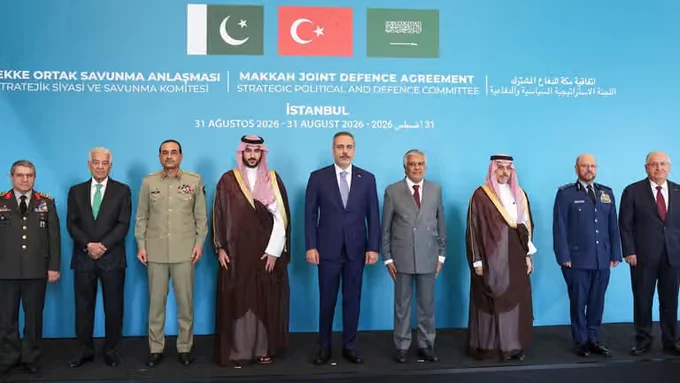
The foreign and defense ministers, along with the chiefs of staff, from Pakistan, Saudi Arabia, and Turkey convened in Riyadh on Monday, October 5, for the second meeting of the Mecca Defense Pact. The summit aimed to institutionalize the joint alliance, develop military industries, and discuss the latest regional security developments.
According to a statement from Pakistan's Ministry of Foreign Affairs, a high-level delegation including Deputy Prime Minister and Foreign Minister Mohammad Ishaq Dar, Defense Minister Khawaja Muhammad Asif, and Chief of Army Staff General Asim Munir traveled to Riyadh. Turkey's Foreign Ministry also confirmed the attendance of Foreign Minister Hakan Fidan and National Defense Minister Yaşar Güler.
The strategic meeting was hosted by senior Saudi officials, including Foreign Minister Prince Faisal bin Farhan and Defense Minister Prince Khalid bin Salman. This summit marks another step toward formalizing defense cooperation among the three regional powers.
The Mecca Joint Defense Agreement, signed on August 7 of this year, is a strategic pact based on the principle of collective deterrence. A key clause in the agreement states that any aggression or armed attack against the territory of one member will be considered an attack against all three. This principle forms the foundation of the alliance's military and security cooperation.
The committee's first meeting was held in Istanbul on August 30. During that session, the parties agreed to establish a permanent secretariat in Saudi Arabia and to initiate joint cooperation in technology transfer and advanced defense production. Such collaboration could significantly impact the military balance in the region.
This Riyadh summit takes place amid escalating security tensions in the Middle East and West Asia. Previously, on the sidelines of the UN General Assembly, the foreign ministers of the three nations condemned recent attacks on civilian and economic facilities in Saudi Arabia and stressed the need for coordinated protective measures. These moves signal the formation of a new, independent defense bloc within the region's security architecture.
Source: Pakistan & Turkey Foreign Ministries
🌐
