
Consequences and the Path Kabul Should Take
In the world of politics, wars never remain limited to only two or three countries. When tensions rise between major powers or influential regional actors, the ripple effects reach countries that may not even be directly involved in the battlefield. Today many analysts are concerned that if the confrontation between the United States, Iran, and Israel turns into a broader war, its consequences will affect the entire Middle East and Central Asia. In such circumstances, Afghanistan cannot remain isolated from these developments.
Afghanistan sits at a geographic crossroads in the region. The country shares a long border with Iran and also has extensive economic and human ties with it. Millions of Afghan migrants have lived in Iran for years, and a large portion of Afghanistan’s trade passes through Iranian routes. For this reason, any instability in Iran or the Gulf region can directly affect the lives of people in Afghanistan.
The first likely consequence of such a war would be economic pressure. During regional conflicts, the prices of oil and energy rise rapidly. Afghanistan, which imports most of its fuel and many essential goods from abroad, is particularly vulnerable to such increases. Rising oil prices mean higher transportation costs, more expensive food, and increased prices for many basic goods. This situation could place additional pressure on people who are already facing serious economic challenges.
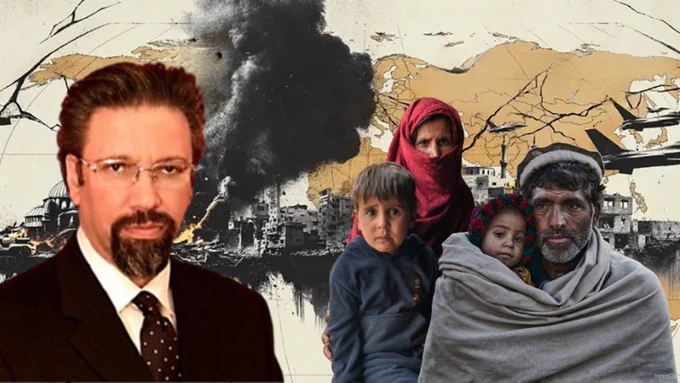
The second major consequence concerns migration. Iran has been one of the largest hosts of Afghan migrants. If widespread war or instability occurs in Iran, millions of Afghan migrants might be forced to return. In its current situation, Afghanistan is not economically or infrastructurally prepared to absorb such a large wave of returnees. Managing this issue could therefore become one of the country’s most serious challenges.
The third consequence involves security concerns. During regional wars, borders often become more unstable and the activities of armed groups, arms trafficking, and illegal networks tend to increase. Afghanistan, which has struggled with insecurity for many years, must be careful that its territory does not become a field of competition for regional powers or a place for destructive networks to operate.
There is also another risk, which is the decline of global attention toward Afghanistan. When a larger war erupts in the region, the attention of media and global powers shifts toward that crisis. In such circumstances, Afghanistan may be pushed further to the margins, and humanitarian aid or political attention from the international community could decline.
In response to these conditions, the most important policy Afghanistan can pursue is active neutrality. This means Afghanistan should avoid joining political or military blocs in the region and should strive to maintain balanced relations with all countries. A balanced foreign policy can help Afghanistan avoid being drawn into dangerous regional rivalries.
At the same time, the government should prepare for possible economic emergencies. Stockpiling essential goods, managing markets, and creating alternative trade routes can help reduce economic pressure on the population.
Humane and organized border management is also extremely important. If a wave of returning migrants begins, Afghanistan should work with international institutions to plan for temporary housing, health services, and support for returning families.
History has shown that countries that act with rationality and balanced policy during major regional crises tend to suffer less damage. If Afghanistan can avoid becoming entangled in geopolitical rivalries and instead focus on internal stability and the well-being of its people, it will be better able to navigate the potential dangers of such a war.
Regional wars often reshape the fate of countries far beyond the battlefield. Yet the future is never predetermined. With careful decisions, balanced diplomacy, and a clear focus on national interests, Afghanistan can pass through these global crises with the least possible harm.
Noor Wodjouatt
