
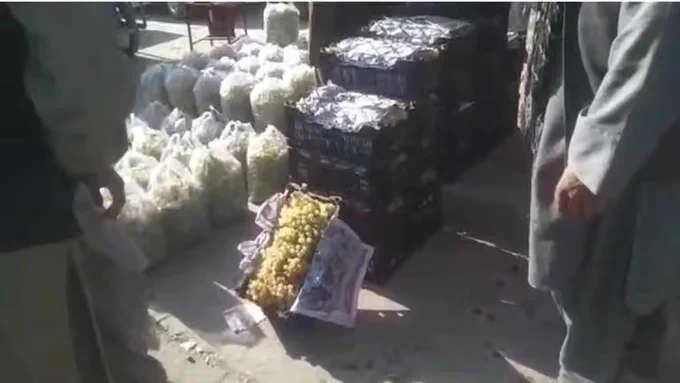
A number of Afghan farmers say that the halt in trade with Pakistan has caused grape prices in Kabul's markets to drop by more than 70%. According to them, this situation has inflicted heavy losses on agriculturalists, and they accuse the Taliban government of neglecting to find alternative markets.
In an interview with Afghanistan International, these farmers said that last year they sold one "kharwar" (a traditional unit of weight) of Kishmishi grapes for about 15,000 afghanis, but this year the price has plummeted to 4,000 afghanis. The price of Shangul Khani grapes has also dropped from 30,000 to between 8,000 and 10,000 afghanis.
The farmers criticize the Taliban government for not making efforts to export grapes and apples to Central Asia and other countries. They also complain about heavy fees paid to the Taliban administration and transport restrictions. The Taliban have banned the transport of fruit on passenger buses, forcing farmers to use cargo trucks, which, due to nighttime travel restrictions, cause produce to spoil.
One farmer said the Taliban collect money from every truck at the entrance to Kabul and again at the fruit market. He added, "This year, the expenses we incurred for the orchard and the fees we paid to the Taliban were more than the money we earned from selling the grapes."
Pakistan closed its crossings on October 11 of last year following border clashes with the Taliban. According to a research report, this move has cost the two countries $2.3 billion in trade opportunities. Although Afghanistan's imports have been rerouted through Iran and Central Asia, agricultural exports have been severely damaged.
Farmers state that while other products like watermelon were exported from the south to Central Asia, no contracts were signed for the export of grapes and apples from north of Kabul, resulting in huge losses for them.
Source: Afghanistan International
🌐
