
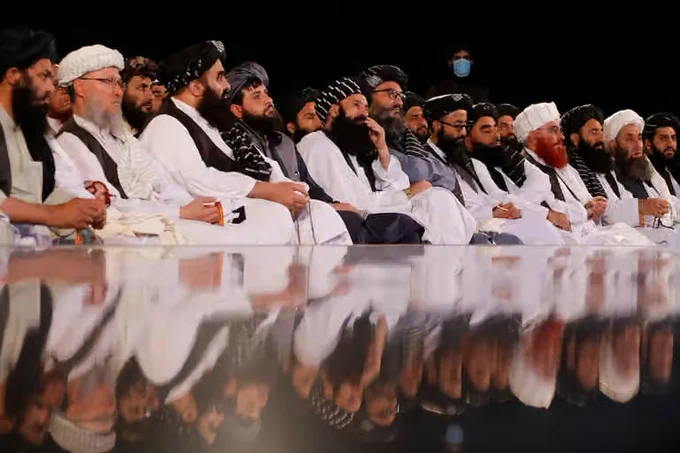
The American magazine The Diplomat has published an analysis arguing that while Taliban leaders have learned from the mistakes of their first regime and now operate more sophisticatedly in controlling and managing the country, they have not changed ideologically.
The article, published on Thursday, October 7, under the title "The Lessons the Taliban Have Learned," contends that the Taliban government has consolidated its control over Afghanistan by extending its influence in local communities, strengthening its nationwide presence, and establishing numerous checkpoints. Compared to their first rule in the 1990s, the group is now more capable of monitoring the population and managing movement.
However, according to the article's author, Agnieszka Pikulicka, this shift in governance style does not signify a change in the group's fundamental beliefs and ideology. The security stability touted by the Taliban has been achieved at the cost of extensive restrictions on the basic rights and freedoms of the people, especially women and girls.
The article points to the ban on girls' education beyond the sixth grade, severe limitations on women's employment and public presence, and the widespread suppression of media and critics as consequences of Taliban rule. These actions demonstrate that the Taliban's increased ability to maintain power has not led to an improvement in the human rights situation or a more open society.
The Diplomat also addresses the deep economic and humanitarian crises in Afghanistan. Poverty, unemployment, food insecurity, and increasing pressure on public services, exacerbated by the mass return of Afghan migrants from Iran and Pakistan, are major challenges facing a large portion of the population.
Another section of the article discusses the approach of regional countries. Nations like China, Russia, and some Central Asian states have engaged with the Taliban government, accepting their rule as a political reality. However, the author emphasizes that this regional engagement is not a sign of ideological change within the Taliban but rather a result of these countries' geopolitical calculations.
Source: The Diplomat
🌐
