
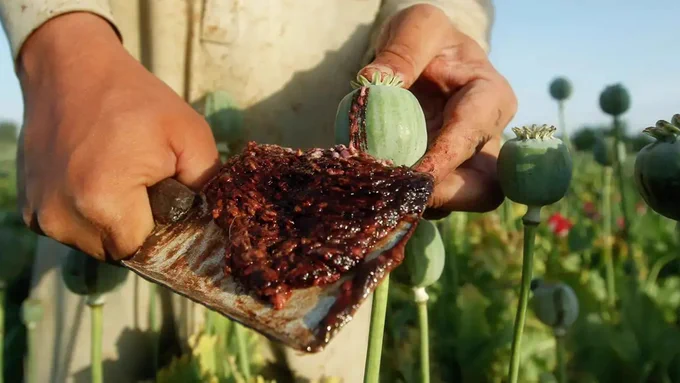
The United Nations Office on Drugs and Crime (UNODC) has stated in its new report that Afghanistan's opium sales revenue reached approximately $525 million in 2026. This figure constitutes 8.5 percent of the country's agricultural sector value.
According to the report, land under poppy cultivation in Afghanistan increased to 43,300 hectares in 2026, a significant jump from 10,200 hectares in 2025. This represents more than a four-fold increase in cultivation within a year. Opium production correspondingly rose from 296 tons to 1,466 tons.
The report highlights that this is the largest increase in cultivation and production since the Taliban government announced a ban on poppy cultivation and narcotics production in April 2022. The surge indicates a partial reversal of the initial success of the ban.
However, UNODC also noted that the current levels of poppy cultivation and opium production are still significantly lower than the figures recorded before the 2022 ban, when Afghanistan was the world's top opium producer.
The findings suggest that despite the ban, economic hardships and a lack of viable alternative livelihoods have driven many farmers back to poppy cultivation. The high prices for opium following the prohibition have also served as a major incentive.
The Taliban government has previously rejected UN reports on narcotics in Afghanistan, claiming the figures do not align with official statistics or on-the-ground realities. They have consistently reiterated their commitment to eradicating narcotics from the country.
Source: UNODC
🌐
