
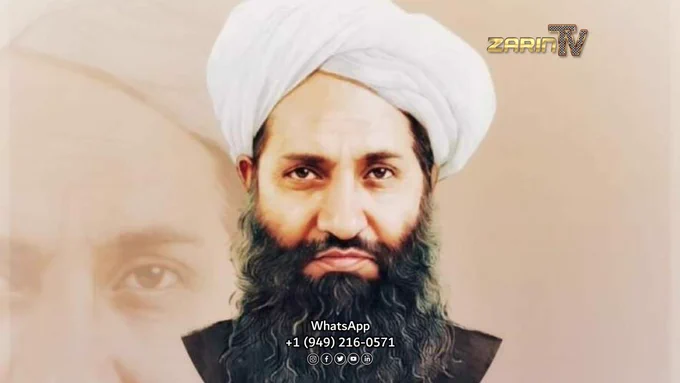
In recent weeks, a heated debate has emerged among Afghan religious scholars and Taliban officials regarding the mention of Mullah Hibatullah, the Taliban group’s leader, in Friday and Eid sermons.
Religious scholars argue that there is no authentic or even weak hadith making this obligatory, calling the practice an innovation.
They emphasize that neither the Prophet Muhammad nor the Rightly Guided Caliphs did this, and prominent jurists like Imam Shafi’i and Imam Shatibi also considered it a newly invented practice.
On the other hand, Mullah Hibatullah, the Taliban group’s leader, insists that mentioning the ruler’s name in sermons is obligatory and warns that disobeying this order is sinful.
Some religious sources point out that this directive lacks religious roots and is mainly for worldly and political purposes.
Some Afghan scholars also believe that unless people have seen and pledged allegiance to their leader, mentioning his name in sermons is not permissible.
These disagreements have raised concerns about religious freedom and the independence of scholars in the country.
Hashtags:
