
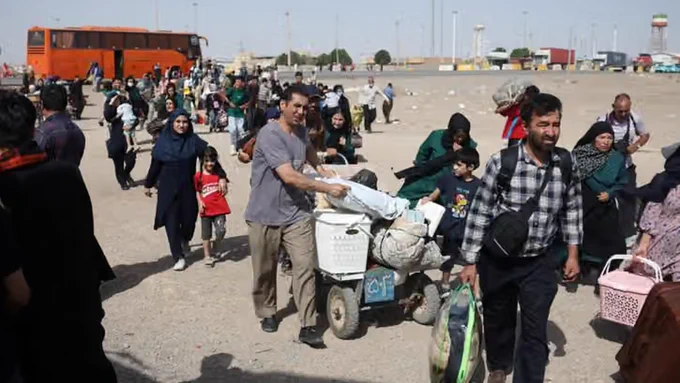
A PBS News report portrays the dire situation of Afghans being deported from Iran and Pakistan, who upon returning to their homeland face severe poverty and an uncertain future. The Taliban's rule has been accompanied by economic collapse and a bleak outlook, especially for young people.
According to the report, many of the deported Afghans had lived in neighboring countries for years. Amir, a young man deported after 20 years in Iran, told PBS News: "I have nothing here; no work, no life, no home. In Iran, I at least had an income."
Wazir, another young man deported from Iran, recounts how he was arrested and beaten after walking for hours to enter Iran. Severe poverty in Afghanistan compels many to try to go to Iran for work again, despite these dangers.
The situation at the Pakistan border is similar. Jamila, a woman deported with her 9 children, says her family hid for months in fear of the Pakistani police, and even her eight-year-old son was beaten by them. Her 14-year-old daughter, who dreamed of becoming a doctor, is now out of school.
According to International Organization for Migration (IOM) statistics cited in the report, over 6.4 million Afghans returned or were repatriated from Iran and Pakistan between September 2023 and August 2026. The UN also says that about 600,000 Afghans have returned from Pakistan this year alone.
These mass returns are putting immense pressure on Afghanistan's limited resources. A reduction in international aid has worsened the situation. The budget for the UN refugee program in Afghanistan this year may be cut to one-third of its 2022 level. The UN estimates that by the end of the year, another two million refugees may be returned to Afghanistan, deepening the humanitarian crisis.
Source: PBS News
🌐
