
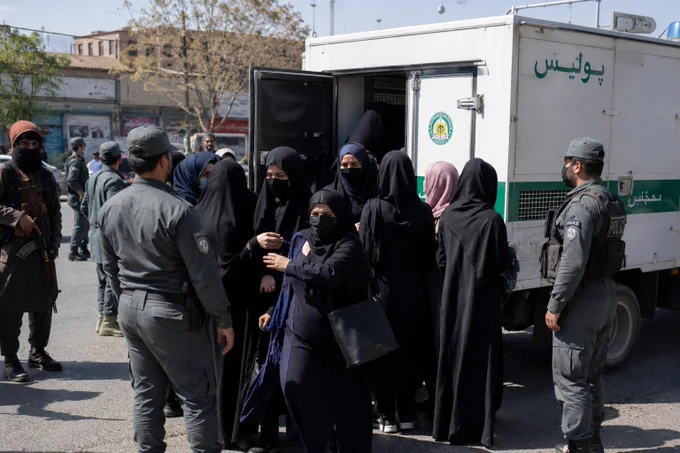
The recent detention of several women in Herat because of their clothing has once again raised an important question: What happens when religion becomes the law of the state?
Reports indicate that a number of women and girls in Herat were detained by the authorities over issues related to dress and public behavior. This is not an isolated incident. It is part of a broader reality that Afghan women have been facing over the past several years.
Today, millions of Afghan girls are denied the right to education. Women have been excluded from many jobs and face restrictions on travel, work, education, and participation in public life. As a result, half of Afghanistan’s population has been deprived of many of its basic rights.
The experience of Afghanistan shows that when a particular interpretation of religion is turned into mandatory law for all citizens, individual freedoms gradually become restricted. In such situations, the government moves beyond protecting citizens’ rights and begins making decisions about personal matters such as clothing, behavior, and daily life.
These restrictions do not affect women alone. Many Afghan men also suffer from these policies. Fathers who cannot send their daughters to school, brothers who watch the future of their sisters disappear, and husbands who see their wives lose opportunities all share this pain. The suffering of women becomes the suffering of families and society as a whole.
History has shown that whenever religion and government become too closely connected, the risk of misusing religion increases. Europe experienced periods when religious institutions held political power and many personal freedoms were limited. Over time, the separation of religion and state helped expand civil liberties and allowed people to practice their beliefs without government interference.
For many people, religion is a source of morality, spirituality, and personal comfort. However, the law of the state should protect the rights of all citizens, whether they are Muslims, followers of other religions, or people with different views. The role of government is to serve society, not to impose one religious interpretation on everyone.
Afghanistan can move toward progress, justice, and stability only when all its citizens, especially women and girls, enjoy the rights to education, employment, freedom, and human dignity. No society can reach its full potential while denying opportunities to half of its population.
The detention of women in Herat is more than just a news story. It is a reminder that freedom, justice, and human rights depend on a system that places citizens at the center and respects their dignity rather than controlling their private lives.
Noor Wodjouatt
