
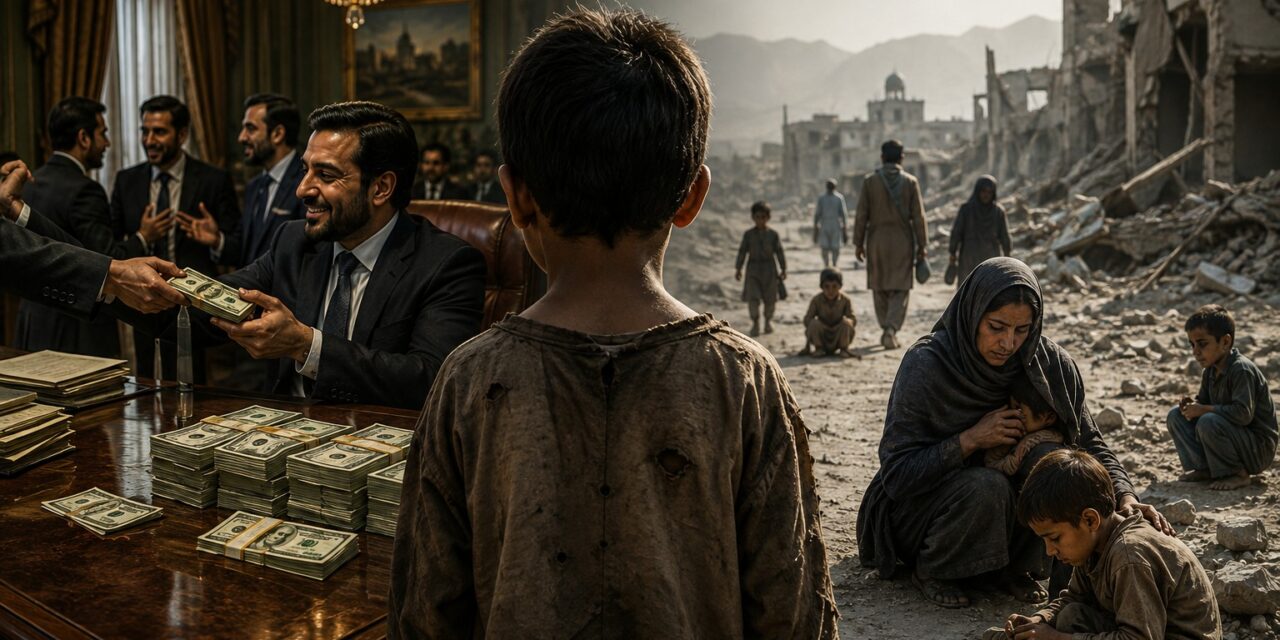
Why did corruption, bribery, and greed for money and power become so widespread in Afghanistan?
In my opinion, we should not blame this on the nature of the Afghan people. Corruption is more often the result of difficult conditions, a weak system, and weak institutions.
Several important factors can help explain this problem.
1. Decades of War and Instability
When a society experiences more than forty years of war, people begin to lose trust in the government, the law, and even one another. Some people develop the attitude that they must take whatever they can today because they do not know what tomorrow will bring.
2. Weak Rule of Law
When a government employee or public official knows that taking bribes or stealing public money will not lead to serious punishment, corruption grows.
When the law is enforced only against ordinary and powerless people, while powerful individuals remain above it, corruption becomes stronger.
3. Favoritism and Personal Connections
In many cases, qualifications and ability have been replaced by ethnicity, family connections, friendship, political loyalty, and personal influence.
When a qualified person sees someone else receiving an important position only because of connections, that person gradually loses trust in the system.
4. Poverty and Low Salaries
Poverty alone does not make a person corrupt. However, when a government employee does not earn enough to support a family and is also given an opportunity to accept bribes, the risk of corruption increases.
5. Large Amounts of Money Without Proper Oversight
After 2001, billions of dollars in foreign assistance entered Afghanistan. However, government institutions and oversight systems were not strong enough to properly manage and monitor that money.
When large amounts of money enter a country without strong supervision and accountability, enormous opportunities for corruption are created.
6. Power Without Accountability
This is one of the most dangerous causes of corruption.
When a minister, governor, commander, member of parliament, or senior official knows that no one will ask, “Where did you get this money?” political power can easily become a tool for personal enrichment.
7. Corruption Becoming Normal
When bribery and favoritism continue for many years, people gradually begin to accept them as part of everyday life.
People may start saying, “Nothing gets done unless you pay someone.”
At this stage, corruption is no longer limited to the actions of a few individuals. It becomes a serious social problem.
8. Fear of the Future and the Desire to Accumulate Wealth
In a country where governments repeatedly collapse and the future remains uncertain, some people in positions of power try to collect as much money, land, and property as possible within a short period of time.
Their thinking becomes, “The opportunity I have today may not exist tomorrow.”
However, one point is extremely important. We should not say that Afghan people are naturally corrupt or greedy.
The same Afghan, when living in a society where laws are enforced, bribery is punished, and institutions operate according to clear principles, often adjusts to that system and follows its rules.
For this reason, corruption cannot be defeated through moral advice alone.
Afghanistan needs strong institutions, independent courts, free media, financial transparency, employment based on qualifications, and equal enforcement of the law for both ordinary citizens and powerful officials.
In very simple terms, when corruption brings profit and carries no punishment, it grows.
When honesty is respected and corruption has serious consequences, the behavior of society gradually begins to change.
Noor Wodjouatt

