
Noor Wodjouatt
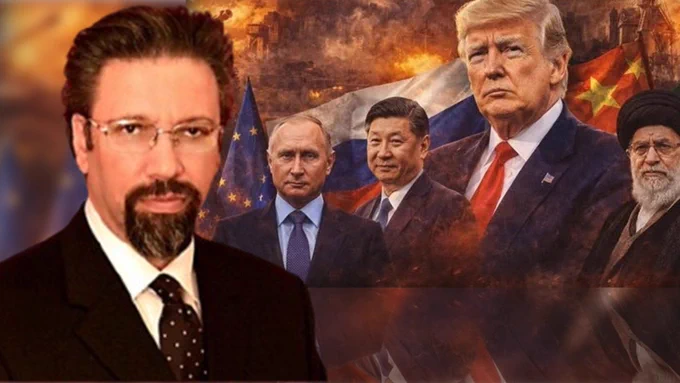
Some political and strategic analysts argue that World War III may not resemble the traditional conflicts of the past such as the First and Second World Wars. In practice, however, there are unmistakable signs that a global, multilateral competition among the world’s major powers has already commenced. The primary reasons behind this perspective are as follows:1. The Great Power CompetitionToday, three dominant global powers find themselves locked in an intense rivalry:
- The United States
- China
- Russia
This competition spans multiple critical domains: economics, technology, political influence, natural resources, and military strength. Many analysts point out that such rivalries throughout history have typically culminated in large-scale global conflicts.2. Interconnected Regional WarsSimultaneously, in several key regions of the world, active conflicts or serious tensions are unfolding, including:
- The Russia and Ukraine War
- Iran and Israel Tensions
- The Middle East Crisis
- The China and United States rivalry over Taiwan and the South China Sea
These wars are not isolated events. More often than not, major powers are operating behind the scenes, fueling and shaping each of these conflicts.3. Modern Warfare Goes Far Beyond the BattlefieldToday’s wars are no longer fought solely with tanks and soldiers. The new forms of warfare include:
- Economic warfare (through sanctions and trade restrictions)
- Technological warfare (competition in artificial intelligence and semiconductor chips)
- Cyber warfare
- Information and media warfare
For this reason, a growing number of analysts assert that World War III is already underway, though in the form of a “New Cold War.”4. The Battle Over Vital ResourcesAn intense global struggle is being waged over the world’s most critical resources, such as:
- Oil and natural gas
- Rare earth minerals (essential for technology and artificial intelligence)
- Global trade routes (including the Panama Canal and the Strait of Hormuz)
Control over these resources has the potential to determine the balance of global power for decades to come.5. Shifting Global AlliancesIn the past, the world was divided into two distinct blocs. Today, alliances are no longer fixed, and nations continuously shift their positions based on their own national interests. This fluid and unpredictable environment has introduced a heightened level of instability into the global order.A Critical CounterpointMany political scientists, however, do not subscribe to this view. They argue that the conditions for a true World War III have not yet materialized, for the following reasons:
- Major powers are not engaged in direct military confrontation with one another
- The global economy is deeply and mutually interdependent
- Nuclear weapons serve as a powerful deterrent against full-scale war
