
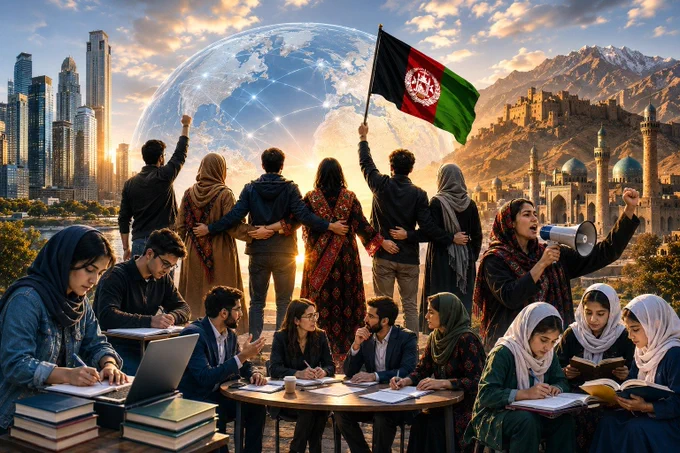
Since the Taliban returned to power, millions of Afghans around the world, particularly in Europe, the United States, Canada, and Australia, have been asking themselves how they can contribute to a better future for Afghanistan. Many people believe that struggle is only possible on the battlefield, but history has shown that ideas cannot be defeated by weapons alone. Ideas are challenged through knowledge, education, media, and unity.
Afghans living in the West today have opportunities that many people inside Afghanistan do not possess. They have access to free media, civil society organizations, universities, and decision-making institutions. These resources can become powerful tools for defending the rights and interests of the Afghan people.
The first responsibility of Afghans abroad is raising awareness. The world must not forget the situation of Afghan women, girls, journalists, and ordinary citizens. Every Afghan can help keep the voices of the Afghan people alive by writing articles, engaging on social media, producing media content, and communicating with international organizations.
The second path is investing in education. The more educated, informed, and skilled Afghanistan’s younger generation becomes, the less space there will be for extremism. Supporting online education, scholarships, and educational initiatives may be among the most effective investments in Afghanistan’s future.
The third responsibility is preserving national unity. The Taliban benefit from ethnic, linguistic, and political divisions. When Afghans abroad promote the same divisions, they unintentionally contribute to the continuation of the crisis. Afghanistan’s future will become brighter when Afghans see themselves first and foremost as citizens of one nation.
The fourth path is political and civic engagement in their countries of residence. Successful Afghans can build relationships with parliamentarians, media outlets, universities, and human rights organizations and draw their attention to the realities facing Afghanistan.
Ultimately, the most powerful challenge to the Taliban is the creation of a different vision for Afghanistan: an Afghanistan where women and men have equal access to education, where the rule of law prevails, where freedom of expression is respected, and where citizens enjoy equal rights regardless of ethnicity, language, or religion.
History has shown that no government can resist the will of the people and the march of progress forever. Afghanistan’s future will be shaped not by guns, but by knowledge, awareness, unity, and the determination of the Afghan people.
Noor Wodjouatt
